Madison County History
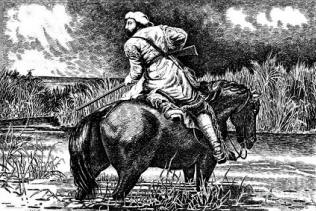 History
of Madison County as told by the old settlers who lived the life!
They tell what they saw and how they lived, their encounters with
the Native Americans, and stories of the pioneers who blazed their
way!
History
of Madison County as told by the old settlers who lived the life!
They tell what they saw and how they lived, their encounters with
the Native Americans, and stories of the pioneers who blazed their
way!
Enjoy articles written by Moses Lemen, Thomas
Lippincott (43 articles!), Samuel Slater, Cyrus Edwards, Judge
Joseph Gillespie, Solomon Preuitt, Thomas S. Pinckard, Governor
Edward Coles, Samuel Parker Gillham, and more!
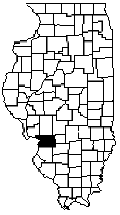 On
September 14, 1812, Madison County was established in the Illinois
Territory out of Randolph and St. Clair Counties, by proclamation of
the Governor of Illinois Territory, Ninian Edwards. It was named for
U. S. President James Madison, a friend of Edwards, and had a
population of 9,099 people. At the time of its formation, Madison
County included all of the modern State of Illinois north of St.
Louis, as well as all of Wisconsin, part of Minnesota, and
Michigan’s Upper Peninsula.
On
September 14, 1812, Madison County was established in the Illinois
Territory out of Randolph and St. Clair Counties, by proclamation of
the Governor of Illinois Territory, Ninian Edwards. It was named for
U. S. President James Madison, a friend of Edwards, and had a
population of 9,099 people. At the time of its formation, Madison
County included all of the modern State of Illinois north of St.
Louis, as well as all of Wisconsin, part of Minnesota, and
Michigan’s Upper Peninsula.
A meeting was held on April 5, 1813 at the home of Thomas
Kirkpatrick in Edwardsville, where appointed commissioners were to
report on their selection of a county seat. A meeting was held on
January 14, 1814, where the court ordered the sheriff to notify the
commissioners appointed by law to fix the place for the public
buildings (courthouse and jail) for Madison County. The county seat
was established in the town of Edwardsville, with the first public
building – the jail – being erected in 1814. The first county
courthouse was erected in Edwardsville in 1817.
During the period 1819 to 1849, Madison County was reduced in area
to its present size, about 760 square miles. All of the public lands
had become the property of individuals and had been converted into
thousands of productive farms. New towns and villages were
established, such as Collinsville, Highland, Marine, Venice,
Monticello [Godfrey], Troy, and Alton.
HISTORY OF THE WESTERN MILITARY ACADEMY
HISTORY OF THE WYMAN INSTITUTE
History of the
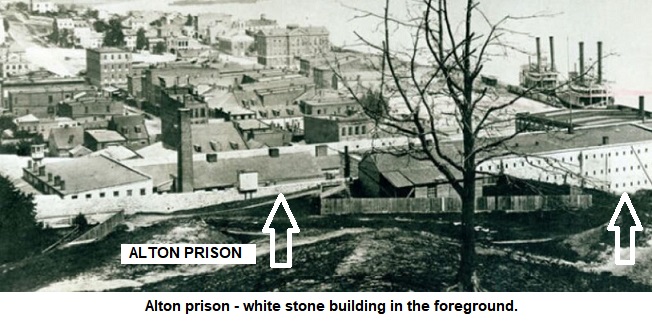
Illinois State Penitentiary in Alton (1833-1860), and the
military post
and Confederate prison (1861-1865).